Concrete retaining walls in Cathedral City CA - a wall built to drain and stay put
Soil sliding onto your patio, or a slope you can't use? We build a reinforced concrete wall with drainage behind it that holds the ground.
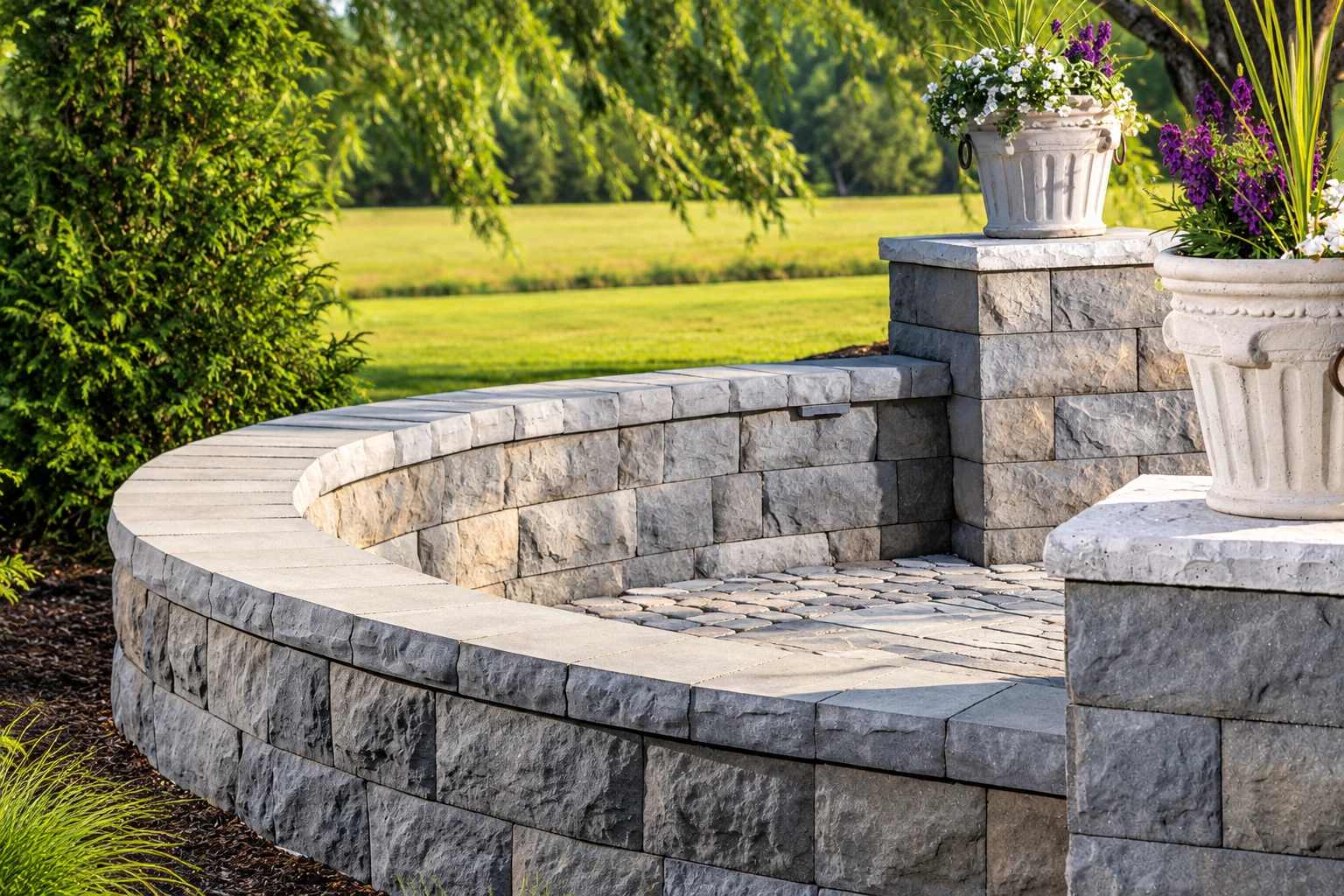
Wall and footing
The wall and its base, reinforced and built to work together.
Drainage behind it
Gravel and drain outlets so water doesn't build up back there.
Grading around it
Ground shaped so surface water runs away from the wall.
Cleanup and walk-through
We clean up and walk the finished wall with you.
What does building a concrete retaining wall involve?
Concrete retaining walls in Cathedral City hold back soil so a slope becomes level ground you can use, and each one is two parts working together: a reinforced wall and the footing, the wide concrete base it stands on.
The wall takes the sideways push of the soil, and the weight of dirt resting on the back of the footing, called the heel, keeps it from tipping forward. Behind it go gravel, drain outlets and grading. If a budget gets tight, I'd rather trim the finish on the face than the drainage or the footing, because nobody sees those once the dirt goes back.
The price mostly follows the wall's height and length, how much digging and hauling the slope needs and what the wall has to carry above it. The schedule turns on the permit, the city's inspection days and the weather on pour day. I measure all of that at your property, and the written estimate spells out your wall.
- A wall built for what sits above
- Drainage planned along with the concrete
- Reasons explained before you decide
- A clean site and final walk-through
How do you know your yard needs a retaining wall?
If a slope on your property is moving, washing out or just in the way, it's worth a look before the next heavy rain.
Dirt landing on hardscape
Soil and gravel from a slope keep ending up on your patio or concrete pool deck, and sweeping it off has become routine.
A slope you can't use
Part of the yard is too steep to set a table on, plant or walk across, and you'd like it level.
An old wall leaning out
A block, timber or concrete wall has started to tip forward or bow in the middle, which usually means pressure is building behind it.
Stains or cracks on the face
Damp patches, water stains or new cracks on an existing wall often point to water trapped behind it with nowhere to go.
Water heading toward the house
Runoff from higher ground runs toward your foundation or pools along the bottom of a slope after a storm.
New work planned nearby
You're adding a driveway, a slab or new fill near a slope, and the ground needs holding back before that goes in.
Get an estimate for your wall
Send the wall's rough length and height, slope photos and any driveway plans nearby. I'll reply within one business day to set your free on-site estimate, no obligation.
What I look at before quoting a retaining wall
Before I recommend anything, I walk the slope, measure it and ask what you want from the yard, because the right wall depends on what's above it and where water goes.
Where the water runs
I trace where runoff comes from and where it can go, since the drain outlets behind a wall need somewhere to empty.
What the wall carries
We note what sits up top, a patio, a path or a concrete floor for a shed, since that weight presses on the wall.
Height and length
We measure the run and how much soil the wall holds back, which sets the footing size and the rebar, the steel bars inside.
How the crew gets in
We check how forms, concrete and the crew will reach the spot, since a backyard behind a narrow side gate takes more work.
What to expect on a retaining wall job
We plan a retaining wall around your schedule and the city's, since Cathedral City starts weekday work earlier from May through September and allows no construction on Sundays.
Your call
You call or send a message about your slope, and I get back to you to set a time to come see it.
The site visit
I come out myself, measure the slope, check the drainage and listen to what you want the wall to do.
Written estimate
You get a written estimate laid out in full, so you can look it over and decide in your own time.
Permit and pour
We take care of permits, plan inspections for Monday through Thursday when the city holds them, prep the ground and pour when weather suits.
Walk-through
We clean up and walk the wall with you, pointing out the drain outlets to keep clear so water doesn't build up behind it.
Why homeowners here call Cathedral City Concrete for retaining walls
When you call about a retaining wall, you deal with the person who started the company, and you hear the reason behind each choice before you're asked to make it.
The owner sees your job
I come out myself to look at the slope and write the estimate, and I stop by while our foreman leads our own crew.
In business since 2017
I started this company in 2017 after spending every summer through school working on concrete crews.
Fully licensed and insured
We're fully licensed and insured, so the crew building your wall is covered from the first dig to the cleanup.
Satisfaction guaranteed on every job
That's our promise, and I'd rather explain a choice twice than surprise you later. Call (442) 219-3033 to talk your wall through.
Building concrete retaining walls in Cathedral City
Cathedral City's Building Division issues building permits, reviews plans and inspects construction work in the city, so it's the office that decides what your wall needs before anyone digs. When a permit is needed, we handle the application, set up the inspections and keep you posted, so you aren't the one chasing the paperwork.
Most walls we build here and in cities nearby, from Palm Springs to La Quinta, level off a backyard slope, hold ground beside a driveway or make room for a patio. Summer heat shapes our pour days, because concrete placed in the midday sun can end up with a weak, dusty top, so we pour early.
Got a slope at your place that needs holding back?
(442) 219-3033Retaining wall questions we hear
How much does a concrete retaining wall cost in Cathedral City?
In the city of Riverside, a poured concrete retaining wall usually costs about $15 to $45 per square foot of wall face, installed, which is the going rate there and not our price. Because it's priced by the face you see, a taller wall costs more even at the same length, and digging, drainage and what the wall carries move it too. The written estimate I prepare at your property gives you the number for your wall.
Why does drainage matter so much behind a retaining wall?
Poor drainage is by far the most common reason walls that hold back soil perform poorly, and left alone those problems can turn into outright failure. Water trapped behind a wall greatly increases the load on it and can cause leaks, so we build in drainage gravel, filter fabric, perforated drain outlets and grading that carries surface water away, as the design calls for.
How do I plan a retaining wall if I might add a driveway above it later?
Tell your builder before the design is set, because adding a driveway near the wall, changing the backfill, the soil or gravel behind it, or letting water collect there can upset a wall's design even when the concrete is strong. That's why I ask early about any driveway or new fill you might add, so the wall is built for it from the start.
How long does a new concrete retaining wall need to cure before backfilling?
Backfill should wait until the wall has enough strength and any bracing it needs, and hot-weather industry guidance says curing, keeping fresh concrete from drying out with wet burlap and plastic or a liquid curing compound, starts right after finishing and lasts at least 3 days. Heavy compacting machines right behind a young wall can overload it, so it's fair to ask any crew how they'll pack the fill.
Who should I hire to build a concrete retaining wall in California?
Hire a licensed concrete contractor, because California's state licensing board defines that trade as one that forms, pours, places, finishes and installs mass, flat and other concrete work. Since a wall depends on what's behind it as much as the pour, ask any contractor how they handle the drainage and the backfill.
Can a retaining wall go right next to my property line?
Often it can, because some poured walls use a footing that extends to only one side, so the whole wall stays on your side of the line on a tight lot. We look at where the line runs during the visit and plan the footing around it.
Ask Cathedral City Concrete about your wall
Call (442) 219-3033 any day from 8 AM to 9 PM, or send the form, and we'll set a time to look at your slope.