Concrete parking lot building in Cathedral City CA - a lot that drains and holds up
Parking area cracking, sinking or holding water? We build a concrete lot on a packed base, with planned joints and water that runs off.
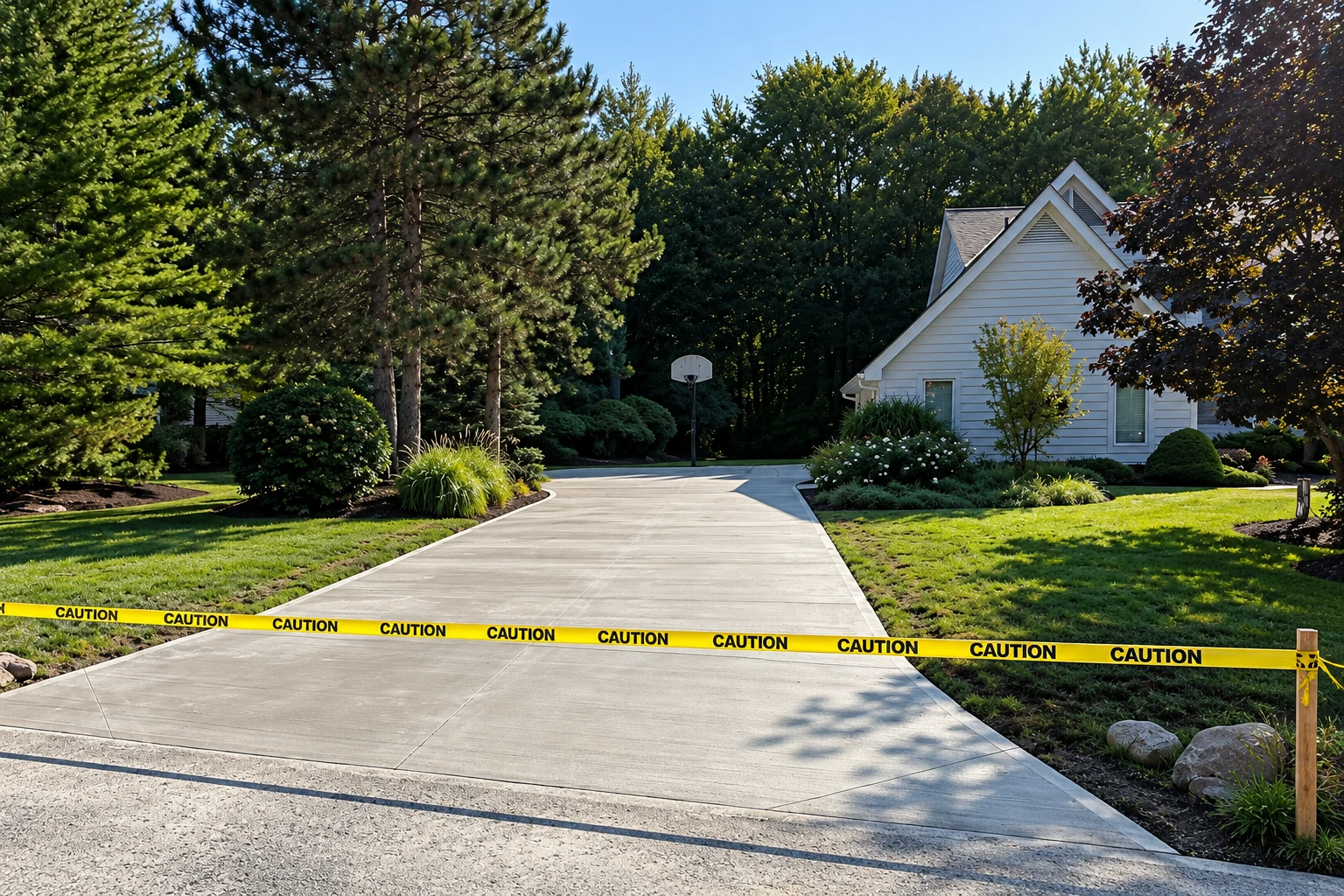
Dug-out, packed base
We remove soft dirt and pack the ground firm first.
Water that runs off
The lot is sloped so rain moves away from buildings.
Planned crack lines
Joints laid out so normal cracking follows lines we chose.
Slab sized for traffic
Thickness set for the cars and trucks that use it.
What goes into building a concrete parking lot in Cathedral City?
Concrete parking lot building in Cathedral City means digging out and packing the ground, sloping it so water runs off, then pouring a slab sized for your traffic and cutting control joints, the planned lines where it's meant to crack. Built that way, a lot can give years of good service with little upkeep.
The price moves with the lot's size, how much soft dirt has to come out, how thick the slab must be for the traffic it carries and how much grading it takes to move water off. The schedule turns on city plan review for larger lots, a pour day that suits the weather and curing, the wait while the slab gains strength before anyone parks on it. Your written estimate covers your own lot.
When a budget gets tight, the base is where people want to cut, because nobody sees it once the concrete is down. I won't cut it, because a slab is only as steady as its subgrade, the ground it sits on, and a corner that settles cracks first. We're based in Cathedral City and work in many of the cities around it, from Desert Hot Springs and Palm Springs to La Quinta and Beaumont.
- A firm, packed base under the slab
- Water carried away from your building
- Cracking kept to planned joint lines
- A broom-swept surface tires can grip
How do you know your parking lot needs replacing?
It's worth a look when the lot starts costing you in patching, puddles or complaints, or when a new building needs parking.
Cracks that keep spreading
Cracks that widen each season let water into the ground below, and that softens the base until whole sections start to break.
Water that sits after rain
Puddles that linger after a storm or a hose-down mean the surface was never sloped to carry water off the lot.
Sunken or uneven sections
When one area dips below the rest, the dirt underneath has usually settled because it was raked level instead of dug out and packed.
Chipping and a dusty top
A top that flakes or wears to powder under tires often traces back to a pour in midday heat that dried too fast.
Water running toward the building
If rain runs toward your doors, the lot slopes the wrong way, and if the building has settled, ask about foundation raising too.
New building, no paving yet
A new shop or office on bare ground needs a lot planned for its traffic and drainage from the start, before anything is poured.
Get an estimate for your lot
Send your lot's square footage, number of spaces and any work past the property line, and I'll reply within one business day to book a free on-site estimate, no obligation.
What I look at on a parking lot visit
Before I recommend anything, I walk the lot to see what the ground is doing, where water goes now and what traffic the new slab will carry.
The ground underneath
I look for soft spots and loose fill in the subgrade, because that decides how deep we dig out and how much base goes back.
Where the water runs
I check how the lot sheds water now and where it should go, so the new slab falls away from your building.
Traffic and thickness
Delivery and trash trucks press harder on a slab than cars, so the traffic decides how thick we pour and where rebar, steel set inside, goes.
Poles, posts and walls
Light poles, sign posts and trash enclosure walls each need concrete footings, so I mark where they go before planning the slab.
How a parking lot job runs with us
We plan a parking lot job around how your property runs, so the work and the cure land on days you've agreed to and your tenants or customers know what's coming.
Call or message
You call (442) 219-3033 or send the form, and I get back to you to set a time to see the lot.
I see the lot
I come out, measure, check the ground and drainage, and listen to how you need the lot to work.
Your written estimate
I send an estimate written out in full, so you can see each part of the work before you decide anything.
Permits, base and pour
We take care of any permits, prepare and pack the ground, and pour on a day that suits the weather.
Joints and walk-through
We cut the joints, keep traffic off while the slab cures, then walk the finished lot with you and answer your questions.
Why property owners call Cathedral City Concrete for parking lots
We've been in business since 2017, and on a parking lot you can count on a plain explanation of each choice before we ask you to make it.
The owner prices your job
I come out myself to look at the lot and prepare the estimate, so you talk to the person who answers for it.
Our crew, led by our foreman
Our own crew does the work under our foreman, and I stop by while it's underway to look over the base and joints.
Fully licensed and insured
The state licensing board defines concrete contractors as those who form, pour and finish pavement and flat slabs, and we're fully licensed and insured.
Satisfaction guaranteed on every job
That's our promise on every lot we pour. When you're ready to talk about yours, call (442) 219-3033 or send the form.
Concrete parking lot building in Cathedral City and nearby cities
In Cathedral City, the Engineering Department reviews grading and drainage plans for private lots. Work on your property runs through the grading permit and work past the property line through an encroachment permit, and a site that needs a grading permit or disturbs more than 5,000 square feet of soil also needs an approved dust control plan before earth-moving starts. We take care of that paperwork.
Most lots we're called to around Cathedral City sit behind small shops, offices and apartment buildings, and the trouble is usually old paving on raked dirt that has settled into dips and puddles. We do the same work in Palm Desert, Indio and the other cities nearby, digging out and packing the base the same way.
Planning a new parking lot or replacing an old one?
(442) 219-3033Parking lot questions we hear
How much does a concrete parking lot cost in Cathedral City?
The cost comes down to the lot's size, the ground under it and the traffic it has to carry, so I give you a real figure only after seeing it. Tearing out old paving, a thicker slab for truck traffic and work past the property line all push the price up, while a level site on firm ground keeps it down. The written estimate lays out each part so you can see where the money goes.
Does my parking lot need a water quality plan in Cathedral City?
It does if the lot is 5,000 square feet or more or has 25 or more parking spaces, because the city's development requirements call for a Preliminary WQMP, a water quality management plan, when the project is submitted and a final WQMP before the Grading Plan is approved. The regional water board's permit says those design standards can apply to the whole development when a redevelopment project replaces half or more of the paved surfaces on an existing site, so ask the Engineering Department about yours. On bigger lots, we help you line up these plans before grading begins so they're part of the schedule from the start.
Who handles permits for a parking lot in Cathedral City?
We do, filing the application, setting up the inspections and keeping you posted along the way. It helps to have your lot's square footage, its number of spaces and any work past the property line ready at the start, because those decide which city plans and permits apply.
Can you pour a concrete parking lot in summer heat?
Yes, though hot weather makes cement harden faster and fresh concrete lose moisture faster, which can cause trouble with delivery, placing and curing. Concrete poured in heat generally lasts about as well as concrete poured at normal temperatures, as long as its strength is right and curing keeps the surface from drying out too much. We pick a pour day that suits the weather and stay out of midday heat, and you're welcome to ask how we'll handle delivery and curing on your day.
What causes cracks in a new concrete parking lot?
Some cracking comes with any large slab, because concrete moves as it dries and as temperatures change, and joints are how you control where those cracks form, how wide they get and how they look. We plan the joint layout before the pour so the cracking lands in those lines and not across your parking spaces, and we set it on a packed base so the slab isn't left riding on loose dirt.
How long does it take before you can park on a new concrete lot?
Cars stay off until the slab has cured enough to carry their weight, and that wait depends on its thickness and the weather on pour day. I'll talk through the timing for your lot at the visit, so you can plan where people park in the meantime.
Ask Cathedral City Concrete about your lot
We take calls seven days a week from 8 AM to 9 PM, so you can reach us at (442) 219-3033 after your own business closes.